Smooth Motor is specialized in high precision stepper motor and customized assembly for 32 years.
Language
Smooth Motor is specialized in high precision stepper motor and customized assembly for 32 years.
Discover the key differences between a voice coil actuator and a solenoid.
Electromechanical motion systems are the backbone of modern technology, automation, robotics, and precision manufacturing. Among these, solenoids and voice coil actuators are common linear motion devices. While they may appear similar, they function in distinct ways and are best suited to different applications.
Engineers plus design specialists who aim to select the right component for capability, effectiveness, and affordability need awareness of the variations between a voice coil actuator and a solenoid. This article will cover the operation, design variations, uses, and connections to various motion control technologies, including stepper motors, linear stepper motors, and stackable stepper motors.
It is helpful to comprehend the everyday basis before beginning the comparison. The Lorentz force theory, which states that an electric current passing through a coil creates a magnetic field, is the basis for both voice coil actuators and solenoids. Motion is produced when this field interacts with a ferromagnetic core or permanent magnet.
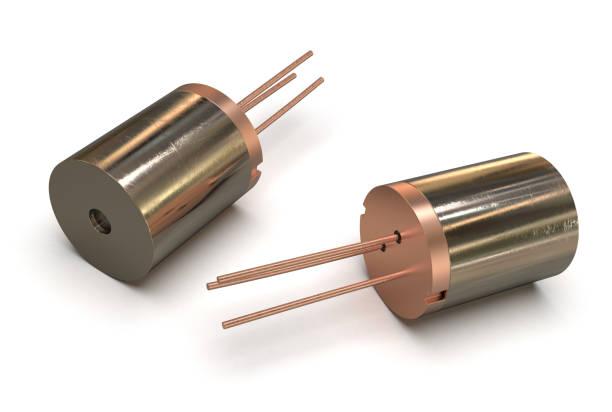
● Typically, a solenoid generates push-pull linear motion that is on/off.
● However, depending on the input current, a voice coil actuator can move in both directions and with precision and proportionality.
They are appropriate for a wide range of industrial applications due to this crucial difference.
One of the most basic kinds of linear actuators is a solenoid. It has a movable ferromagnetic plunger inside a cylindrical housing that is encircled by a wire coil. The plunger is pulled in a single direction by the magnetic field created as current passes through the coil.
● Binary Motion: Usually, solenoids offer two positions: retracted and extended.
● Quick Response: They perform exceptionally well in applications requiring fast switching.
● Simple Construction: They are inexpensive and simple to integrate because they have fewer parts.
● Limited Control: Motion is either entirely on or completely off and is not proportionate to the input.
● Latching systems and door locks
● Starters for automobiles
● Fluid control systems' valves
● Vending machines and printers
Even though solenoids remain trustworthy and relatively inexpensive, their inaccuracy limits their application in advanced automation setups. These setups often demand accurate motion regulation.
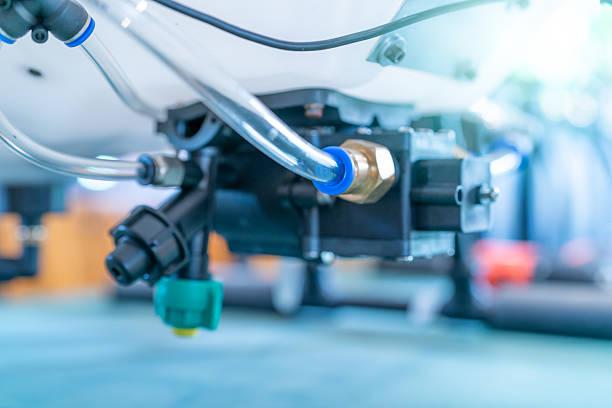
A voice coil actuator (VCA) is a linear actuator that functions similarly to the voice coil found in loudspeakers. It is made up of a moving coil hung in a magnetic field and a permanent magnet assembly. The coil and attached load move back and forth along a linear path when current passes through it, creating a proportionate force.
● Proportional Control: The relationship between input current and motion and force is direct.
● Bidirectional Movement: Pushing and pulling without the need for mechanical adjustments is possible with bidirectional movement.
● High Precision: Perfect for positioning at the micrometer level.
● Smooth Motion: Unlike conventional motors, smooth motion is achieved without cogging or mechanical detents.
● Quick Reaction Time: Ideal for dynamic systems that require rapid adjustments.
● Medical equipment that needs to be moved delicately
● Semiconductor apparatus
● Testing for vibration
● Instrumentation used in aerospace
Linear voice coil actuators are becoming increasingly popular in fields where repeatability, speed, and accuracy are essential due to their high accuracy.
A voice coil actuator design is very different from a solenoid's.
Feature | Solenoid | Voice Coil Actuator |
Motion Type | On/Off (binary) | Proportional, continuous |
Control | Limited | Precise, smooth |
Direction | Single (push or pull) | Bidirectional |
Speed | High but less controllable | High and highly controllable |
Applications | Valves, locks, latches | Precision positioning, optical, medical |
Cost | Lower | Higher, but with advanced functionality |
The chart makes it evident that voice coil actuators are superior in precision-driven applications, whereas solenoids are best at basic switching duties.
It's helpful to contrast voice coil actuators and stepper motors when talking about motion control technology. Although they have different functions, both are frequently utilized in automation.
● Follow electrical pulses to move in distinct steps.
● Ability to place objects accurately in various applications without providing input.
● Industrial stepper motors, hybrid stepper motors, and stackable stepper motors are among the available varieties.
● Rotating motion can be converted to linear motion using a linear stepper motor or a stack linear voice coil actuator.
● Provide high-precision, continuous linear motion.
● More appropriate for activities requiring proportional control, rapid speed, and short range.
● In many situations, closed-loop control requires feedback systems.
Voice coil actuators offer smooth, frictionless linear movement for demanding applications, while stepper motors excel in controlled rotary-to-linear motion conversion.
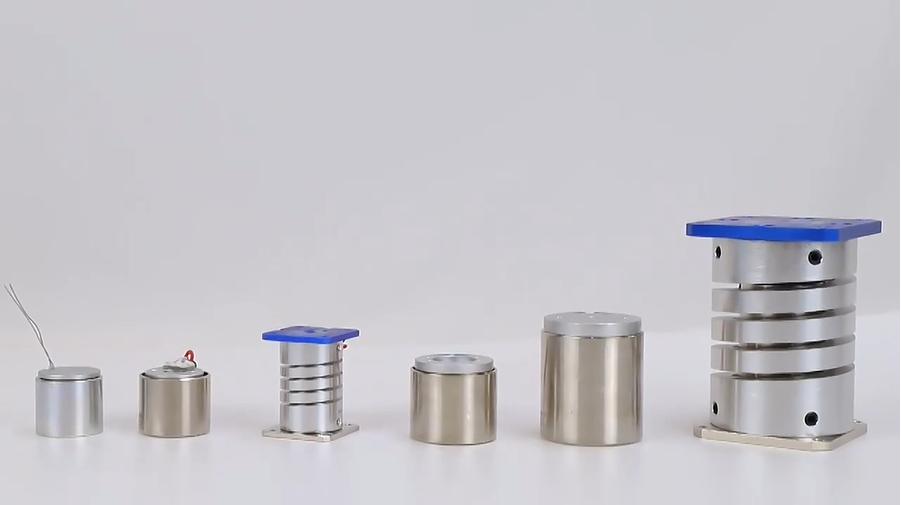
● Precision Control: Voice coil actuators have advantages over solenoids in terms of precision control.
● Bidirectional Force: They are equally effective in pushing and pulling.
● Longer Lifespan: They are more durable since they have fewer mechanical contacts.
● Quiet Operation: Ideal for applications where noise reduction is crucial.
● Smooth Motion Profile: Consistent functioning is ensured by the absence of jerks or detents.
● Simplicity: Low-cost solutions are simple to create and integrate.
● Low Cost: More reasonably priced for widespread application in consumer electronics.
● Compact Design: Small, repetitive switching mechanisms benefit significantly from the compact design.
● High Force in Short Strokes: When only a brief linear displacement is needed, high force in short strokes works well.
The needs of the application determine whether to use a solenoid or a voice coil actuator.
● A solenoid is the best option if the system requires inexpensive, straightforward on/off linear motion.
● A voice coil actuator becomes the superior choice if the task requires two-way movement, balanced regulation, and extreme accuracy.
Voice coil actuators supplied by trusted distributors provide advanced systems in industries such as automation, robotics, chip manufacturing, and healthcare instruments. They deliver the output and reliability that these fields demand.
In the meantime, stepper motors, particularly hybrid stepper motors and stackable stepper motors, continue to be the best options for applications needing precise linear motion conversion or rotary motion. For engineers seeking compact yet practical motion solutions, Smooth Motor, a leading manufacturer of stepper motors, also offers stackable linear actuators.
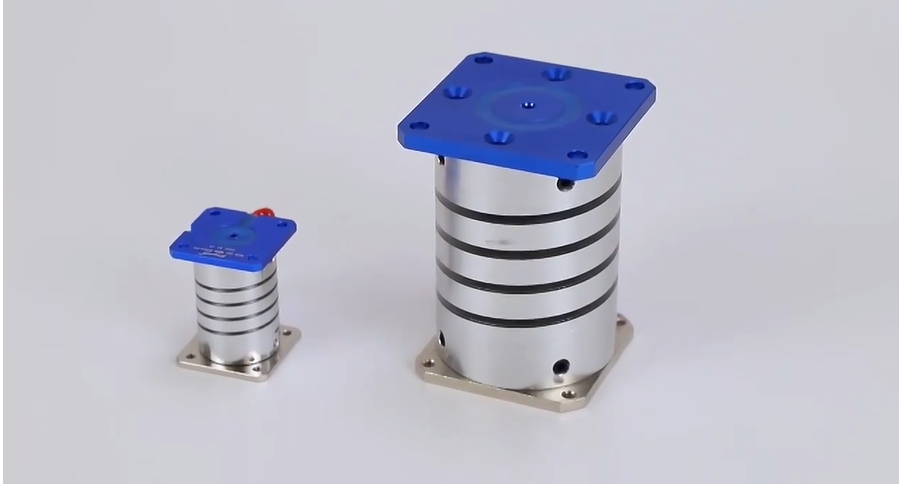
Stepper motors, solenoids, and rotary voice coil actuators are complementary rather than antagonistic in many sophisticated systems.
● Solenoids handle rapid, binary switching.
● Voice coil actuators handle short-range dynamic control and fine-tuning.
● Larger ranges of regulated linear or rotary movements are carried out using stepper motors.
For complicated automation contexts, engineers can achieve optimal performance by integrating these devices into the system design.
High-performance actuators are becoming increasingly in demand as industries change.
● Miniaturization: Compact actuators built for electronics plus medical tools.
● Energy Efficiency: Units that consume reduced electricity yet maintain proper operation.
● Smart Regulation: Sensor linking that enables closed-cycle performance and immediate feedback.
● Customization: For industry-specific requirements, suppliers such as Smooth Motor are providing customized actuator solutions.
The developing use of linear voice coil actuators in precision engineering is demonstrated by their increasing significance in the robotics and medical sectors.
Although they are designed for different uses, solenoids and voice coil actuators both employ electromagnetic principles for linear motion. Voice coil actuators remain the chosen selection for exact, balanced, and dual-direction motion. Meanwhile, solenoids are ideal for simple, low-cost switching tasks.
In automation plus robotics, stepper motors, hybrid stepper motors, and stacked stepper motors remain critical components. They bridge the gaps existing between straight-line and circular motion. Partnering with expert voice coil actuator providers and a reliable stepper motor producer, such as Smooth Motor, ensures access to modern movement control innovations.
Understanding the merits and differences among every actuator style helps determine the correct one for your assignment. It could be a solenoid suited for strong, repeated functions or a linear voice coil actuator for delicate positioning.
Ready to upgrade your automation system? Explore Smooth Motor’s high-precision actuators and stepper motors now.
Send Us A Message
Our extensive experience in diverse motion applications and industries, combined with our in-depth knowledge of the components used in motion control will make us an invaluable resource for your next motion control project.

