Smooth Motor is specialized in high precision stepper motor and customized assembly for 32 years.
Language
Smooth Motor is specialized in high precision stepper motor and customized assembly for 32 years.
Discover the fascinating working principle behind voice coil motors. Learn how these unique actuators convert electrical energy into precise linear motion.
Ever wondered how speakers manage to blast your favorite tunes? Or how your phone's camera focuses in the blink of an eye? The answer lies in a nifty little device called a voice coil motor (VCM). These compact powerhouses convert electrical energy into precise linear motion, making them essential in countless gadgets and gizmos we use every day.
In this article, we'll break down the inner workings of VCMs and explore their diverse applications. Get ready to unravel the magic behind these unsung heroes of the tech world!
Voice coil motors, often shortened to VCMs, might sound like something straight out of a sci-fi flick, but they're quite simple to grasp. At their core, they operate on a fundamental principle of physics: the interaction between electricity and magnetism.
Think back to your high school science class ( we know, we know...not the most thrilling memories). Remember playing with magnets and noticing how they attract or repel each other? Now, imagine harnessing that invisible force to create motion. That's essentially what a VCM does!
Here's the breakdown:
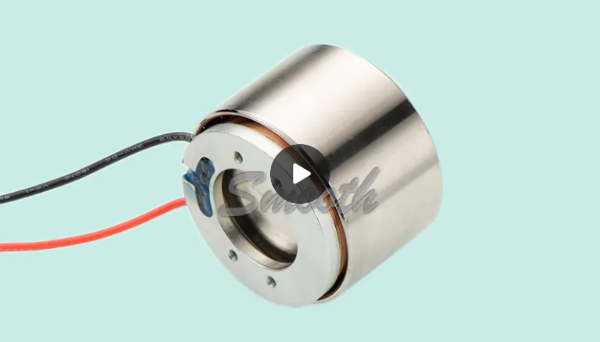
● The Coil: A VCM has a coil of wire, usually made of copper, that acts as an electromagnet when an electrical current passes through it.
● The Magnet: This coil sits within a permanent magnetic field, typically created by a strong permanent magnet.
● The Interaction: When electricity flows through the coil, it generates its own magnetic field. This field interacts with the permanent magnet's field, causing the coil to move. Think of it like two magnets pushing or pulling against each other.
● Linear Motion: This interaction results in linear motion—meaning the coil moves in a straight line, rather than rotating like a typical motor. This makes VCMs perfect for applications that require precise, back-and-forth movements.
Now that you've got a handle on the basic voice coil motor working principle, let's pop the hood and take a closer look at the individual parts that make up a voice coil motor. Think of these components as the band members, each playing a crucial role in creating the "music" of motion.
This is the heart and soul of the VCM. It's typically a cylindrical coil of wire, often made of copper or aluminum, that acts as an electromagnet. When an electrical current courses through it, the coil generates a magnetic field. The number of turns in the coil, its diameter, and the material used all influence the strength of this magnetic field.
No coil can dance without its partner – the magnet. This provides the permanent magnetic field that interacts with the coil's field. You'll typically find strong permanent magnets, like neodymium or ferrite magnets, in VCMs. The shape and strength of the magnet play a big role in determining the motor's performance.
To keep the rhythm going, VCMs use a guide or bearing system to ensure the coil moves in a precise, linear path. This prevents any unwanted wobbling or shaking, which is crucial for applications that demand accuracy.
In some VCMs, you'll find a spring that helps return the coil to its original position when the current is switched off. This can be helpful for applications that require a quick return to a resting state.
All of these components are housed within a protective casing, which can vary in size and shape depending on the specific application. The housing helps keep everything in place and protects the delicate inner workings of the motor.
Just like there's no one-size-fits-all shoe, there's no single type of voice coil motor that conquers all. VCMs come in various shapes and sizes, each with its own set of characteristics and strengths. Let's take a look at some of the common types you might encounter:
These are the most common type, where the coil is the moving part within the magnetic field. They're known for their quick response times and precise movements, making them ideal for applications like:
● Haptic feedback systems in smartphones: That little buzz you feel when you tap your phone screen? Thank a moving coil vcm motor!
● Camera autofocus mechanisms: These motors help your phone camera quickly lock focus on your subject.
● Optical disc drives: Remember CDs and DVDs? Moving coil VCMs precisely position the read/write head.
In this type, the magnet does the moving while the coil remains stationary. They're generally more robust and can handle higher forces, making them suitable for applications like:
● Vibration testing equipment: These motors can generate strong vibrations for testing the durability of products.
● Loudspeakers: Yep, those booming bass lines are often powered by moving magnet VCMs.
● Industrial automation: These motors can provide the muscle for moving heavy loads in factory settings.
These are heavy-duty VCMs designed for applications that require high force and long strokes. They're often used in:
● Aerospace and defense: Think missile guidance systems and aircraft control surfaces.
● Manufacturing and automation: These actuators can handle heavy lifting and precise positioning in industrial settings.
● Medical devices: They can provide the force needed for precise movements in surgical robots and other medical equipment.
Let's see how these nifty little motors make a difference in our everyday lives. You might be surprised to learn just how many devices rely on VCMs to function.
Your smartphone is practically a VCM playground. These motors are responsible for:
● Haptic feedback: That satisfying vibration when you type or receive a notification? That's a VCM motor at work.
● Camera autofocus: VCMs enable lightning-fast autofocus, ensuring your pictures are always sharp.
● Optical image stabilization: Some phones use VCMs to stabilize the camera lens, reducing blurry photos caused by shaky hands.
VCMs are essential components in many audio devices, including:
● Loudspeakers: They drive the speaker cones, converting electrical signals into sound waves.
● Headphones: Miniature VCMs deliver precise sound reproduction in your ears.
● Microphones: Some microphones use VCMs to convert sound waves into electrical signals.
The automotive industry also utilizes VCMs for various functions:
● Fuel injection systems: VCMs control the precise amount of fuel injected into the engine.
● Active suspension systems: They adjust the suspension in real-time, providing a smoother ride.
● Electric power steering: VCMs assist in steering, making it easier to maneuver the vehicle.
VCMs play a vital role in many medical applications, such as:
● Surgical robots: They enable precise movements during minimally invasive procedures.
● Drug delivery systems: VCMs control the flow of medication in pumps and injectors.
● Medical imaging equipment: They help position sensors and detectors for accurate imaging.
Even in the aerospace industry, VCMs find their place:
● Aircraft control surfaces: They help control the movement of flaps and ailerons.
● Satellite positioning systems: VCMs assist in precise satellite positioning and orientation.
● Missile guidance systems: They enable accurate missile control and targeting.
Like any technology, voice coil motors have their own set of strengths and weaknesses. Understanding these can help you determine if a VCM motor is the right choice for your specific needs.
● High Precision: VCMs are known for their exceptional accuracy and control, making them ideal for applications that demand precise movements.
● Fast Response: They can react quickly to changes in input signals, providing rapid acceleration and deceleration.
● Simple Design: VCMs have a relatively simple construction, which can translate to lower manufacturing costs and easier maintenance.
● Compact Size: Their compact form factor makes them suitable for applications where space is limited.
● Low Noise: VCMs generally operate quietly, making them suitable for noise-sensitive environments.
● Limited Force: Compared to some other motor types, VCMs may not be able to generate as much force, especially for larger applications.
● Heat Generation: VCMs can generate heat during operation, which may require cooling systems in some applications.
● Stroke Limitations: The linear movement of VCMs is limited by the length of the coil and magnet assembly.
● Cost: While generally affordable, the cost of VCMs can increase for specialized applications or high-performance models.
So there you have it! We've explored the ins and outs of voice coil motors, from their basic principles to their diverse applications. Hopefully, you've gained a newfound appreciation for these unsung heroes of the tech world.
Remember those speakers blasting your favorite tunes? Or that smartphone camera capturing stunning photos? Behind the scenes, VCMs are working tirelessly to make it all happen. They're the driving force behind countless technologies we use every day, from medical devices to aerospace systems.
While VCMs might not be suitable for every application, their precision, speed, and compact size make them invaluable in many fields. As technology continues to advance, we can expect to see even more innovative uses for these versatile motors.
Want to learn more about how Smooth Motor can help you harness the power of VCMs? Check out our website at https://www.smoothmotor.com/ to explore our range of high-quality VCM solutions. We're here to help you find the perfect motor for your specific needs.
Send Us A Message
Our extensive experience in diverse motion applications and industries, combined with our in-depth knowledge of the components used in motion control will make us an invaluable resource for your next motion control project.

