Smooth Motor is specialized in high precision stepper motor and customized assembly for 32 years.
Language
Smooth Motor is specialized in high precision stepper motor and customized assembly for 32 years.
Discover the key differences between two-phase and three-phase stepper motors. Learn how each type impacts performance, efficiency, and applications.
Ever wondered how those precise movements in your 3D printer or CNC machine happen? It's all thanks to stepper motors, the unsung heroes of motion control. But did you know there's more than one type?
In this guide, we'll break down the differences between 2 phase vs 3 phase stepper motor.
Two phase stepper motors are like the workhorses of the stepper motor world. They're super common and you'll find them in loads of applications. These motors have two sets of windings – imagine them like coils of wire – that get energized in a specific sequence. This creates a rotating magnetic field that pulls the motor's rotor (the spinning part) along with it, step by step.
Think of it like this: imagine you're playing musical chairs, but instead of people moving around chairs, it's a magnet rotating to different energized points within the motor. Each "step" is a precise movement to the next position, giving you accurate control over the motor's rotation.
● Simplicity: They're relatively simple to control and drive.
● Cost-effective: Often a more budget-friendly option.
● Wide availability: Easy to find and source.
But, there's a catch... Two phase stepper motor can sometimes have a bit of vibration, especially at low speeds. This is where three-phase motors come in!
Three-phase stepper motors take things up a notch. Instead of two sets of windings, they have three. This means the magnetic field inside the motor rotates more smoothly, kind of like having an extra push between each step in our musical chairs game. This leads to:
● Reduced vibration: That smoother rotation means less shaking and a quieter operation.
● Higher torque: They often pack more power, especially at low speeds.
● Better accuracy: You can achieve finer movements with a three-phase motor.
Now that you know the basics, how do you pick the right stepper motor for your project? Here's a breakdown of some key factors to consider:
Torque is a measure of rotational force how much "oomph" the motor has to turn things. If you need to move heavy loads or operate at low speeds, you'll need a motor with higher torque. Three-phase stepper motors generally have the edge here, especially at those lower speeds.
Think of it like this: Imagine trying to open a stubborn jar. You need a good grip and some force to twist that lid off. A high-torque motor is like having a strong grip for your application!
Resolution refers to how finely you can control the motor's movement. The higher the resolution, the smaller the steps the motor can take. This is crucial for applications that require precise positioning, like 3D printing or robotics. Three-phase motors often offer better resolution due to their smoother rotation.
Here's an analogy: Imagine drawing a picture. High resolution is like using a fine-tip pen to create detailed lines, while low resolution is like using a thick marker – you can't get quite as much detail.
How fast do you need your motor to spin? Two phase stepper motor can be a good choice for high-speed applications, but they might vibrate more at lower speeds. 3 phase stepper motor, on the other hand, can deliver smooth performance across a wider speed range.
As we mentioned earlier, vibration can be a concern with stepper motors. If your application is sensitive to noise or vibration, a three-phase motor is often the better choice.
The electronics that control your stepper motor are also important. Three-phase motors typically require more complex drive circuitry, which can add to the overall cost.
Generally, 2 phase hybrid stepper motors are more budget-friendly upfront. However, the added performance and efficiency of a three-phase motor might save you money in the long run, especially if it reduces wear and tear on your equipment.
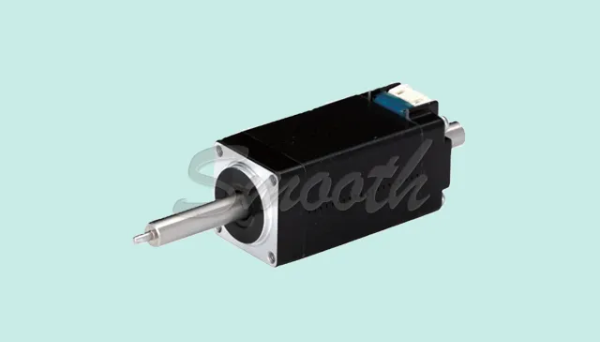
Let's see where these stepper motors strut their stuff:
These motors are the go-to choice for many common applications, thanks to their affordability and simplicity. You'll often find them in:
● Consumer electronics: Think printers, scanners, and cameras – anything that needs precise, controlled movements.
● Automotive: They're used in fuel injection systems, climate control, and even power windows.
● Medical devices: 2 phase stepper motors play a role in pumps, fluid control systems, and medical imaging equipment.
● Textile machinery: They help control fabric tension and movement in sewing and weaving machines.
Smooth Motor Example: Our [insert product name and link] is a popular choice for customers needing a reliable and cost-effective 2 phase stepper motor for various applications.
When you need a smoother operation, higher torque, and finer control, three-phase steppers step up to the plate. They excel in:
● CNC machines: These motors provide the accuracy needed for precise cutting, milling, and engraving.
● Robotics: Three-phase steppers enable smooth and precise movements in robotic arms and actuators.
● 3D printing: They deliver the fine control needed for accurate layer deposition and smooth print head movement.
● Aerospace: They're used in positioning systems, actuators, and gimbal controls.
Stepper motors are constantly evolving. We're seeing new developments in areas like:
● Integrated stepper motors: These combine the motor and driver electronics into a single unit, making them even easier to use.
● Closed-loop stepper motors: These motors use feedback sensors to ensure precise positioning, even under varying loads.
At Smooth Motor, we're always on the lookout for the latest advancements in stepper motor technology. Check out our website to see our full range of stepper motors and find the perfect solution for your needs!
Now, you should have a good grasp of the key differences between 2 phase stepper motor and 3 phase stepper motor. But we know choosing the right motor can still feel like navigating a maze.
That's where we come in. At Smooth Motor, we're not just about selling motors – we're about finding the perfect motor to meet your unique needs.
What makes us different?
● Wide Selection: We offer a diverse range of stepper motors, from standard models to specialized options with advanced features.
● Expert Advice: Our team of engineers can help you navigate the selection process, answering your questions and offering guidance based on your specific application.
● Quality Assurance: We're committed to providing high-quality motors that meet rigorous standards for performance and reliability.
● Customer Support: We're here to support you every step of the way, from selecting the right motor to troubleshooting any issues you might encounter.
We've explored the ins and outs of two-phase and three-phase motors, from how they work to where they shine.
● Two-phase: Cost-effective, widely available, but can have some vibration.
● Three-phase: Smoother, more powerful, and precise, but often pricier.
Ultimately, the best choice depends on your specific needs. Need help deciding? Don't hesitate to reach out to the experts at Smooth Motor! We're here to guide you through the selection process and ensure you find the perfect motor for your application.
Visit www.smoothmotor.com today and explore our wide selection of stepper motors. We're confident you'll find the perfect solution for your needs!
Send Us A Message
Our extensive experience in diverse motion applications and industries, combined with our in-depth knowledge of the components used in motion control will make us an invaluable resource for your next motion control project.

